Hood County Judge Election: Understanding the Role and the Race…
Every four years, Hood County voters choose their next County Judge. Making fully informed decisions can be challenging even in the most intensely covered state or national elections, and the difficulty increases significantly for local races. Most Texas communities are served by a single newspaper and its corresponding online presence (website, social media accounts, and email list). Many communities also have large social media groups where much of the active engagement revolves around rumors and rants about the local political scene.
Candidates running for local office face their own serious challenges in getting their positions known widely, due to the short public campaign season (about 3½ months) and overstretched campaign budgets. In essence, the public needs as much relevant information as quickly as possible during a local campaign season to make the best decision possible.
A County Judge election has an added twist: determining the relevant issues is difficult when the nature of the job itself is not widely understood.
In Part One of this two-part series, we answer the following questions:
What is a County Judge in Texas?
What are the relevant issues facing the candidates this cycle?
What do the candidates say about themselves?
What’s in a Name? Unlike other county elective positions—such as Sheriff or District Attorney—whose responsibilities are well-known and generally consistent across the state, the role of County Judge in Texas is much less understood. Is the County Judge a Commissioner? A traditional judge? The “boss” of all county employees? Does the position have authority over other elected officials?
In Texas, the County Judge serves as the chief executive and administrative officer of the county, presiding over the Commissioners Court, which acts as the county’s governing body responsible for setting budgets, taxes, and policies.
Key Powers:
Approving expenditures
Overseeing county operations
Directing emergency management
Representing the county in administrative matters
Additional Responsibilities Include:
Preparing and submitting the proposed county budget
Calling elections
Posting public notices
Canvassing returns
Heading civil defense and disaster relief
Overseeing certain statutory welfare functions
Serving on the juvenile board
Notably, a County Judge is not required to be a licensed attorney; the Texas Constitution only mandates that the judge be “well informed in the law of the State.” Most county judges statewide are not lawyers.
Judicial responsibilities in the constitutional county court include handling probate, guardianship, juvenile, and mental competency cases, as well as appeals from justice courts, serving as a magistrate, and conducting inquests when needed.
In counties like Hood County, which has a separate county court at law, the County Judge typically handles a limited judicial caseload focused on the areas above, while broader misdemeanor criminal and civil matters (up to $250,000) are often shifted to the county court at law, whose judge must be an attorney.
Is the County Judge a Commissioner?
No. The County Judge is not a County Commissioner. The position presides over the Commissioners Court as its presiding officer—responsible for maintaining decorum, counting votes on resolutions, and voting only to break a tie. It is customary for the County Judge to refrain from debating with Commissioners and to reserve judgment for tie-breaking votes. This standard has not always been followed by current County Judge Ron Massingill, who has engaged in heated debates with Commissioners and members of the public, contributing to increased public frustration and one federal lawsuit.
What Are the Relevant Issues?
Nothing happens in a vacuum, including local issues. Few truly “local” issues are untouched by larger regional, state, or national forces. Separating the “noise” that shapes opinions from the “signal”—the matters local officials can actually influence—can be difficult in a limited-information environment.
As the County Judge campaigns heat up, voters should focus on the relevant issues to better distinguish noise, platitudes, and rhetoric from detailed, reasoned solutions.
Here are key issues heading into the March 2026 primary:
Industrial Sprawl
Most Hood County voters are aware of industrial sprawl, largely due to the ongoing controversy over the bitcoin mining data center in Mitchell Bend. Since that conflict began, several other large industrial projects have emerged in various stages of planning, development, or construction, including:
Wolf Hollow III Gas-Fired Power Plant – Mitchell Bend
Solar Power Generation Plant – Across the Brazos River from Pecan Plantation
Amazon Data Center – Former site in south Precinct 2; new potential site unknown
Tolar Data Center – Comanche Circle Project
Hospital Area Data Center – Land under annexation consideration by the City of Granbury
The “signal” from candidates: specific plans to influence or control these projects, particularly through Subchapter K of Chapter 231, Texas Local Government Code. This provision grants Hood County exceptional regulatory powers over unincorporated areas to protect the Lake Granbury watershed and Brazos River while promoting orderly growth. Unlike most Texas counties, Hood County’s Commissioners Court can impose comprehensive controls resembling municipal zoning, including regulations on population density, building sizes, lot occupancy, infrastructure, and utilities. The Hood County Development Commission, recently convened for the first time, advises on these matters.
Weaponization of County Law Enforcement
The recent “Ouchie Meme” arrest and short-lived prosecution of local veteran Kolton Krottinger highlighted concerns about politically motivated investigations and prosecutions by the Hood County Sheriff’s Office and District Attorney’s Office. This case is the latest in a series of questionable actions under Sheriff Roger Deeds, including those involving Constable John Shirley, Commissioner Dave Eagle, Hood County Republican Chairmen Nate Criswell and Steve Biggers, Pastor Diane Rasberry, Precinct Chairman Van Vernon, and citizen Bryson Mead.
The “signal”: candidates publicly supporting increased scrutiny of the justice system through independent audits or state/federal investigations. “Noise” would be reluctance to take a clear stand.
3. Budget Control and Taxation
After voters approved two recent bonds totaling nearly $150 million—plus the 2023 GISD VATRE that added $8.2 million annually to taxpayer costs—appetite for new spending may be limited. Historically, the Sheriff’s Office has been the largest driver of budget strain, often requesting off-budget raises and capital expenditures justified as “emergencies.”
The “signal”: specific proposals to keep Sheriff’s Office spending in line with other departments and a commitment to reject favoritism, off-budget raises, and unplanned expenditures.
Who Are the Candidates?
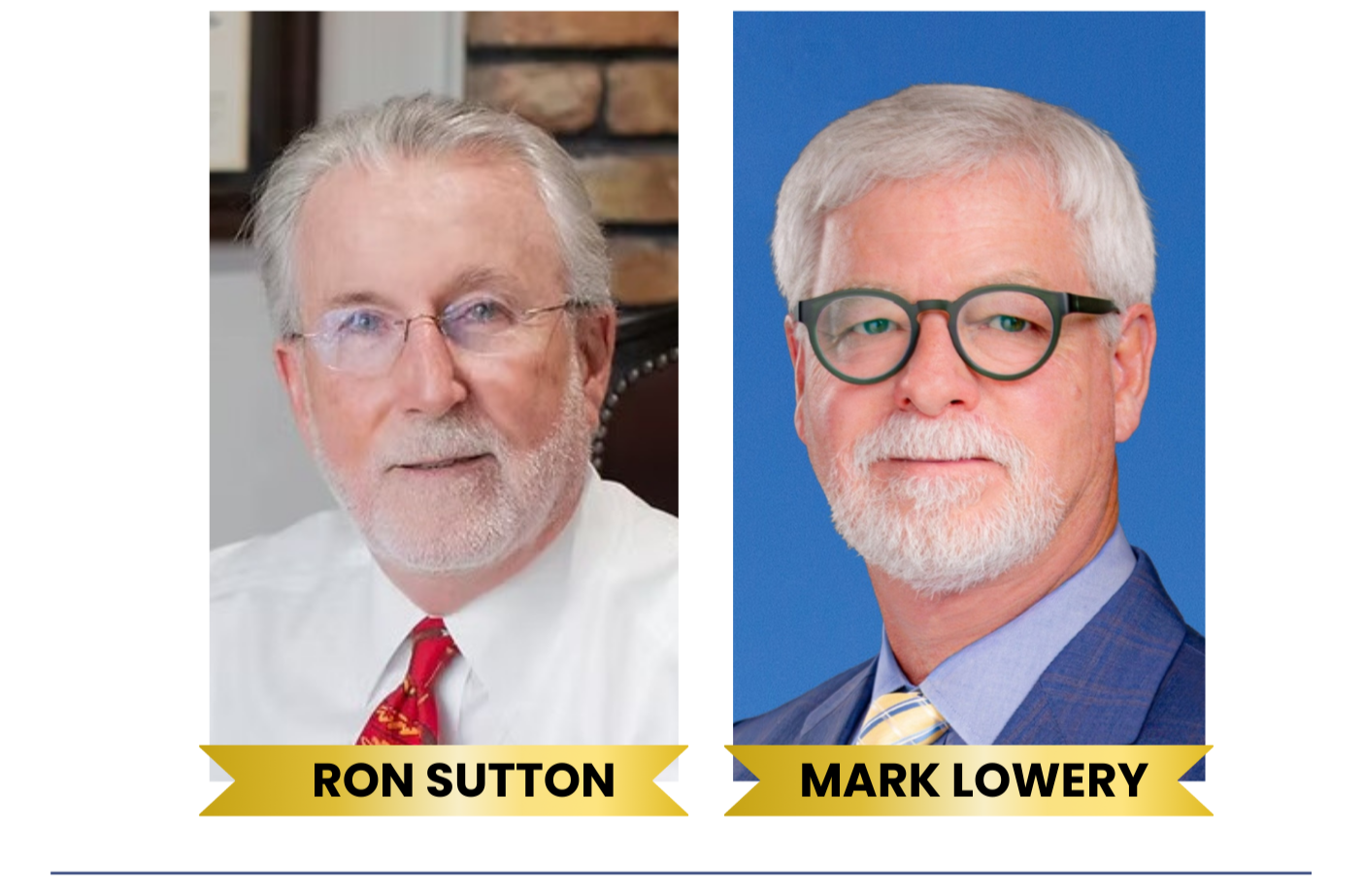
Mark Lowery Mark Lowery supplied the following biography:
For more than 35 years, Mark Lowery has dedicated himself to protecting the citizens of this nation, serving with distinction in various capacities with the United States Government and holding a senior executive position within a private oil and gas company. Mr. Lowery served as a Special Agent with the United States Secret Service for 23 years, retiring as a Senior Executive Service Special Agent in Charge of the Dallas District.
Appointed to the Senior Executive Service in 2004 by the Director of the Office of Personnel Management, he oversaw four offices across Texas, including protective responsibilities for Former President George W. Bush’s ranch in Crawford, Texas.
Following retirement from the Secret Service, Mr. Lowery was selected as Special Agent in Charge for U.S. Customs and Border Protection, Office of Internal Affairs, overseeing internal investigations in a five-state region. In 2016, he served as Deputy Director for Security at the Republican National Convention in Cleveland, Ohio, and as a consultant for the 2017 Presidential Inaugural Committee.
Through Lowery & Associates Security Consulting, LLC, Mr. Lowery continues to serve communities by conducting safety and security risk assessments for private corporations, municipalities, places of worship, and colleges in the greater Dallas area. He also provides security consulting for conferences and conventions and applies Secret Service-developed methodologies to conduct behavioral threat assessments.
During his government tenure, Mr. Lowery directed investigations into cybercrimes, financial crimes, bank fraud, credit card fraud, telemarketing fraud, and organized crime. As Assistant Special Agent in Charge and Special Agent in Charge of the Headquarters’ Special Investigations and Security Division, he managed the agency’s most robust hiring campaign, oversaw Top Secret clearance adjudications, and provided policy guidance to senior leadership.
Mr. Lowery served on the White House Detail during the administrations of Presidents Reagan and George H.W. Bush, conducted numerous domestic and foreign security advances, and traveled to over 50 countries. He held key roles in National Special Security Events, including:
1990 G8 Economic Summit in Houston (Site Agent, Rice University)
1996 Olympic Games in Atlanta (Credentials Coordinator and Site Agent for opening/closing ceremonies and the Olympic Cluster)
2016 Republican National Convention (Deputy Director for Security)
Mr. Lowery has received numerous awards, including the U.S. Secret Service Valor Award (1985, the agency’s highest honor) and the Secretary’s Certificate from the Department of Treasury (1986). He served on the Secret Service Peer Support Team and was assigned to rescue and recovery operations following the Oklahoma City bombing.
In the community, Mr. Lowery has served on the President’s Council for Dallas Christian College, the Planning and Zoning Commission for the City of Grapevine, and as a delegate and Sergeant at Arms at the 2024 Texas State Republican Convention.
Mr. Lowery began his career as a uniformed police officer with the St. Louis County Police Department in Missouri for six years. He graduated from Virden Community High School in Illinois and earned a bachelor’s degree in Criminology and Sociology from Illinois State University. He has been married to his wife, Karen, for 40 years. They have two grown, married children with successful careers.
Ron Sutton Ron Sutton was contacted about contributing his biography but chose not to participate. A review of publicly available information yielded the following:
Born and raised in Abilene, Sutton attended public schools there from first through 12th grade. He graduated from Hardin-Simmons University with degrees in Political Science and Business/Public Administration. His career was in the textile and needle trades industries, involving extensive travel.Sutton has been married to Barbara, his high school sweetheart, for 57 years. They have two sons, two daughters-in-law, and eight grandchildren. The family has lived in Hood County for 31 years, which Sutton calls the finest place in Texas.
Editor’s Note:
Ron Sutton had no significant pre-campaign online presence, but his campaign emerged quietly online in early 2025. Political observers noted his close mentoring by current County Judge Ron Massingill in the months before the filing period. Sutton’s public silence on the “Ouchie Meme” case is noteworthy given that his campaign treasurer is the wife of Sheriff Roger Deeds. Close ties to both Massingill and Deeds represent a political risk in the current Hood County landscape.
In Part Two of this series, both candidates will be offered a long-form interview with follow-up questions. Readers are encouraged to submit questions for consideration in next month’s article.